
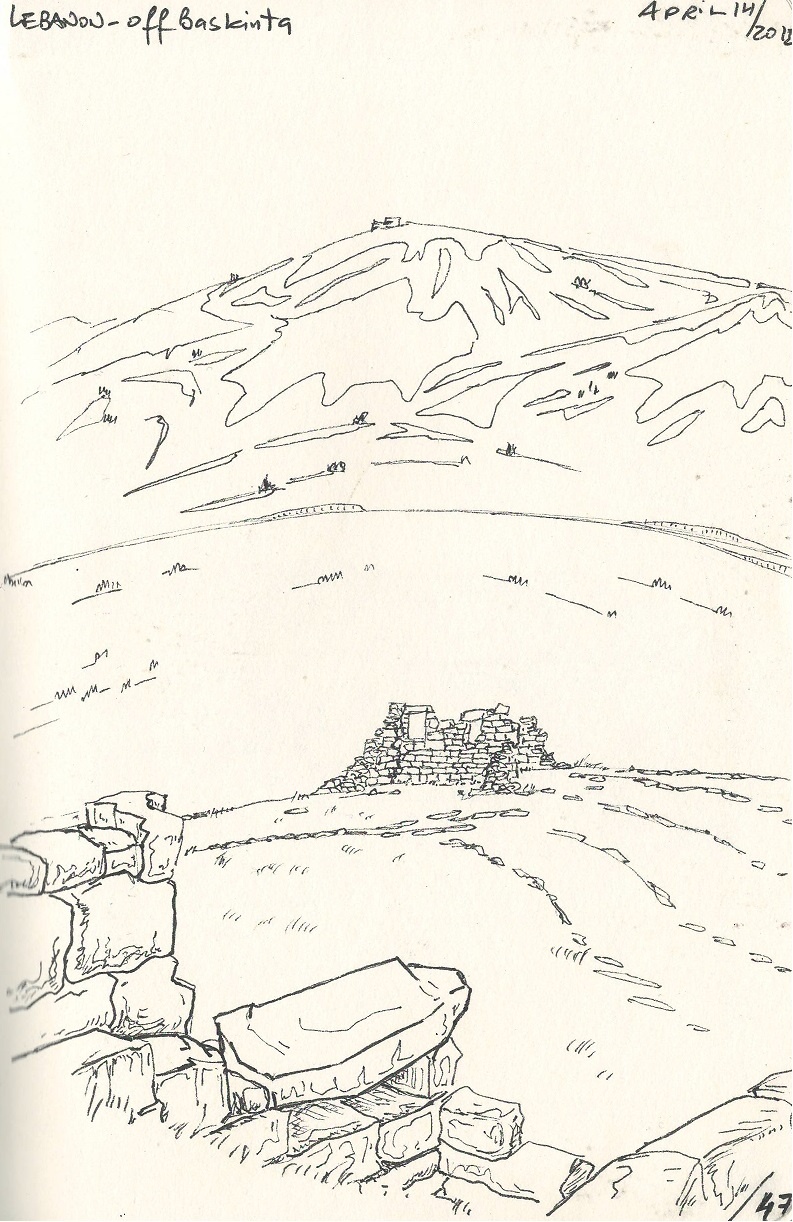
In the hills around Baskinta, snow linger into April and May. In some places, the snow holds out until mid Summer.
This was more common in the past. Going forward, precipitation rates in some countries like Lebanon are not expected to decrease. However, with the expected increase in average precipitation, more of this water will fall as rain, and not as snow.
With more rain coming in, less snow will accumulate on northern mountain faces and sheltered crevasses.
This means less snow to melt in spring and summer, and a decreased recharge of Lebanon's karst aquifers.
This means less water in the summer.
Unless you build dams...or better yet; unless you rebuild ancient terraces, and plant them.
Each terrace is a hidden dam.
The COP30 phased out language about "phasing out" all "fossil fuels"; here's to the return of scientific objectivity
The more we progress, the greater the risk of a devolution into a #DimAge Already, our own #technology is growing too complex for us to understand or manage, and scales up faster than our own understanding can keep up.